Thalia, Muse of Comedy
(Roman copy of lost Greek Original)
Musei Vaticani, Rome
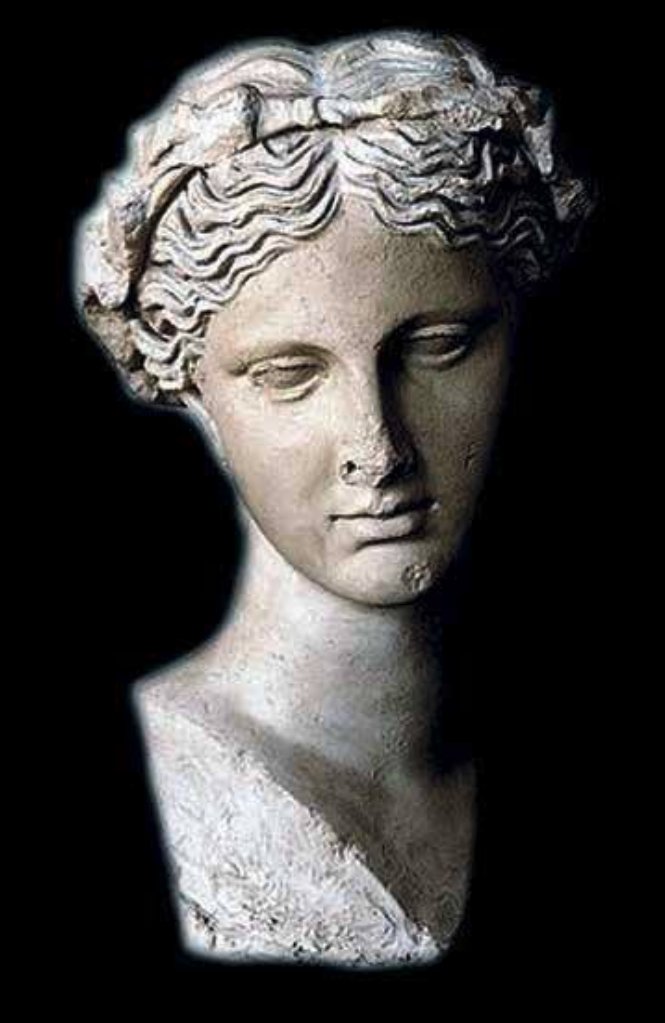
Thalia, The Muse of Comedy
and Pastoral Poetry, Roman
copy of Greek original of
Classical Period. Vatican
Museums, Rome.
This sculpture, Thalia, Muse of Comedy, was recovered from an excavated Roman villa near Tivoli and probably dates from the 2nd century. It resembles Greek models of the late fourth to early third century BCE, reminding us of Roman dependence on Greek originals. Many of the Greek originals have been lost and we now appreciate them through Roman period copies, such as this.
The sculpture depicts Thalia, the eighth born of the nine Muses. The villa where the sculpture was excavated in 1775 was initially thought to have belonged to Cassius, the foremost instigator of the murder of Julius Caesar, though this assessment has been more recently disputed. Thalia is typically portrayed in art as “a young woman with a joyous air, crowned with ivy, wearing boots and holding a comic mask in her hand. Many of her statues also hold a bugle and a trumpet (both used to support the actors’ voices in ancient comedy), or occasionally a shepherd’s staff or a wreath of ivy.”
I was inspired by the beauty and mood of this piece, and the details of the crown and hair which stood in contrast to the more simply defined face. As I started to make a version of it in my studio, without my intention or knowledge of it occurring, my sculpture took on the characteristics of my mother, specifically as a woman around twenty years of age from a black and white photograph taken in Athens in a garden, sitting and talking with a cousin. As I kept working on the piece, the only thing that remained of the Vatican Thalia was the crown and hairstyle; the features had changed to resemble my mother from that time and place.
——————
8. Wikipedia contributors. (2022, June 7). Thalia (Muse). In Wikipedia, The Free Encyclopedia. Retrieved 17:32, July 24, 2022, from https://en.wikipedia.org/w/index.php?title=Thalia_(Muse)&oldid=1092041177